
Troubleshooting for self-driving vehicles
Lead designer on a 12-week internship, redesigning internal enterprise tools used to manage AV issues — reducing autonomous vehicle downtime by simplifying how issues are reported, triaged, and resolved.
Overview
Troubleforce — the real-time triage team — worked across a fragmented flow involving multiple teams, tools, and manual coordination to resolve AV issues in the field. I interviewed and shadowed operators and stakeholders, mapped pain points across the full process, and shipped a focused MVP that reduced triaging and troubleshooting time by 80%.
Challenges
Building domain fluency from scratch.
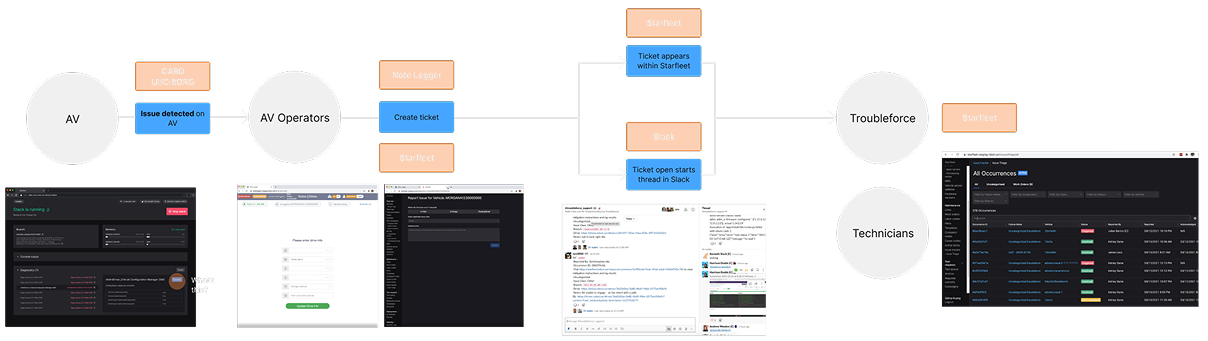
I came in with no prior AV operations knowledge, so my first task was understanding the domain deeply enough to identify the right problems. I shadowed two main user groups on their shifts — AV Operators (engineers in vehicles who monitor and report issues) and Troubleforce (first responders who triage in real time) — to map how issues moved from detection to resolution.
Scoping for impact within a tight timeline.
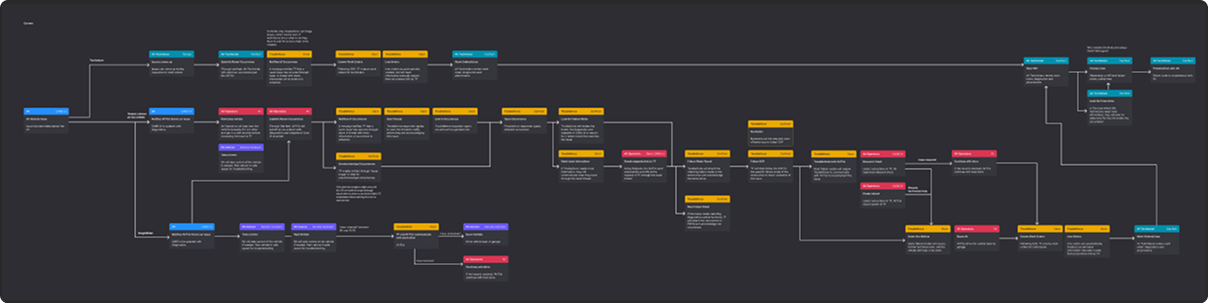
Through mapping out the full end-to-end flow, I was able to validate and test my understanding. The biggest pain point Troubleforce encountered was that they had to wait for other teams to provide data and context because they didn't have access to all the tools used to capture logs.
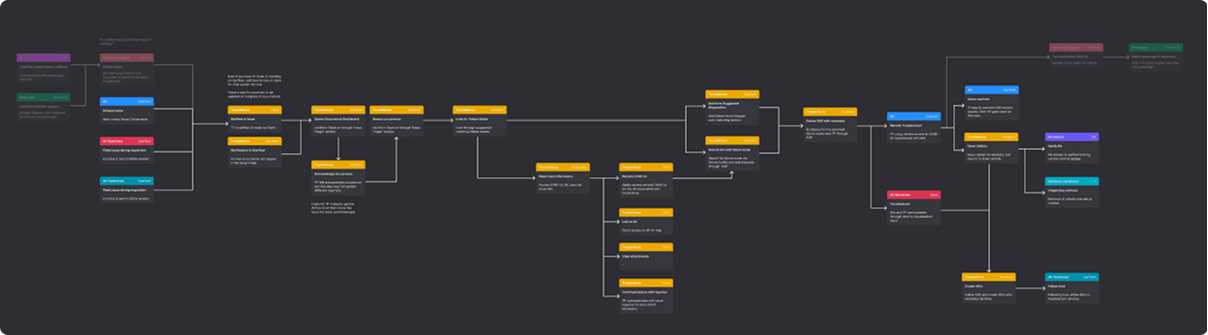
My first instinct was to reduce dependency between user groups by consolidating tools and platforms. But I quickly realized that was far too ambitious for the time I had, so I shifted focus: rather than redesigning the whole workflow, I identified the highest-friction points in the existing UI and designed targeted solutions that could actually ship within the timeline.
Original flow
Proposed flow
Painpoints
Platform is built for data capture, not decision-making.
This results in cognitive overload and time wasted trying to look for the right data to help them make a decision on what to do next.
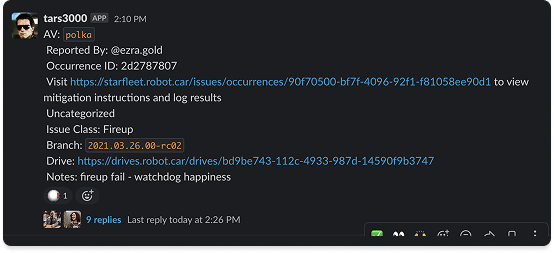
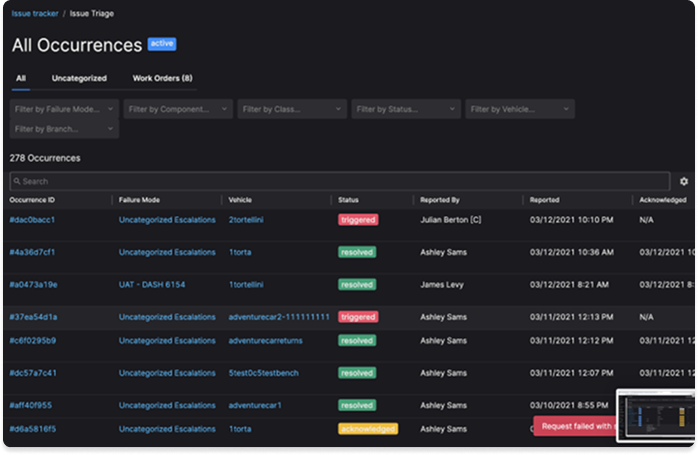
Lack of content structure and information architecture force users to waste time scrolling up and down the page. This is further escalated when users navigate between multiple occurrences across tabs.
Solutions
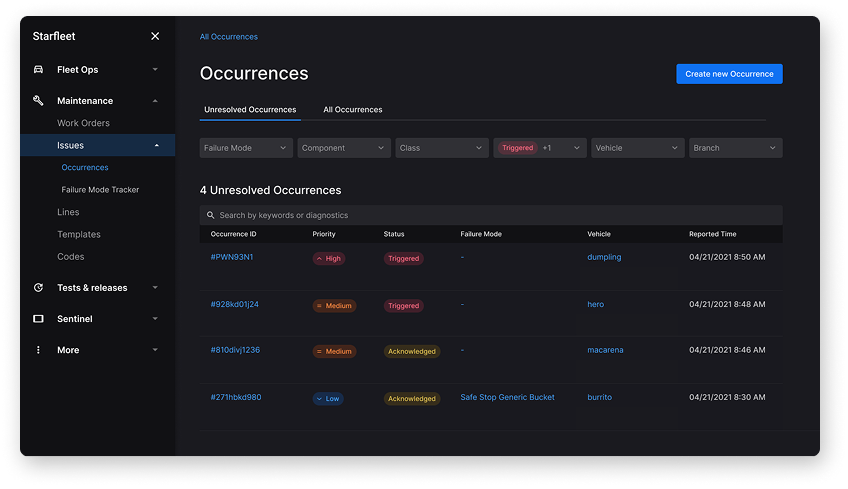
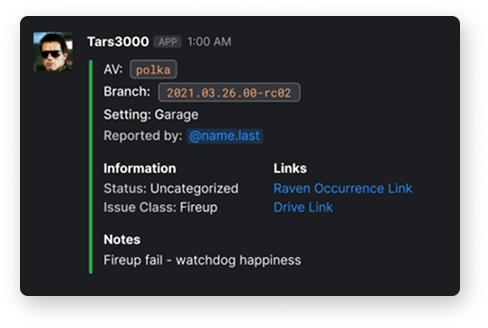
Dashboard set up and focused on action, Slack integration is improved for scan-ability.
Reducing the occurrence table to a focused view, automatically set up to show the right content to help with decision making. Improving Slack integration for better scan-ability — critical in fast-paced problem solving scenarios.
Occurrence Detail is rebuilt for decision-making.
Reducing cognitive load and restructuring the information architecture so Troubleforce can quickly find the context they need and act — without scrolling through irrelevant data.
Reflection
Design for the behavior, not just the requirements
Requirements tell you what the business needs and users tell you what they want. Observation shows you what they need to achieve both.
Data vs decision support
How do you give users everything they need without overwhelming the decisions they have to make? The queue had 22 columns — most of which were never used in triage.
Solutions at every scale
We approached every uncertain area with the simplest viable solution first, then iterated with user feedback — a mindset that kept us shipping within the 12-week sprint.
This is only an overview of the work. After the internship I returned to Cruise on a 9-month contract on ML/AI tooling for offshore labeling (NDA). Happy to share more in conversation :)